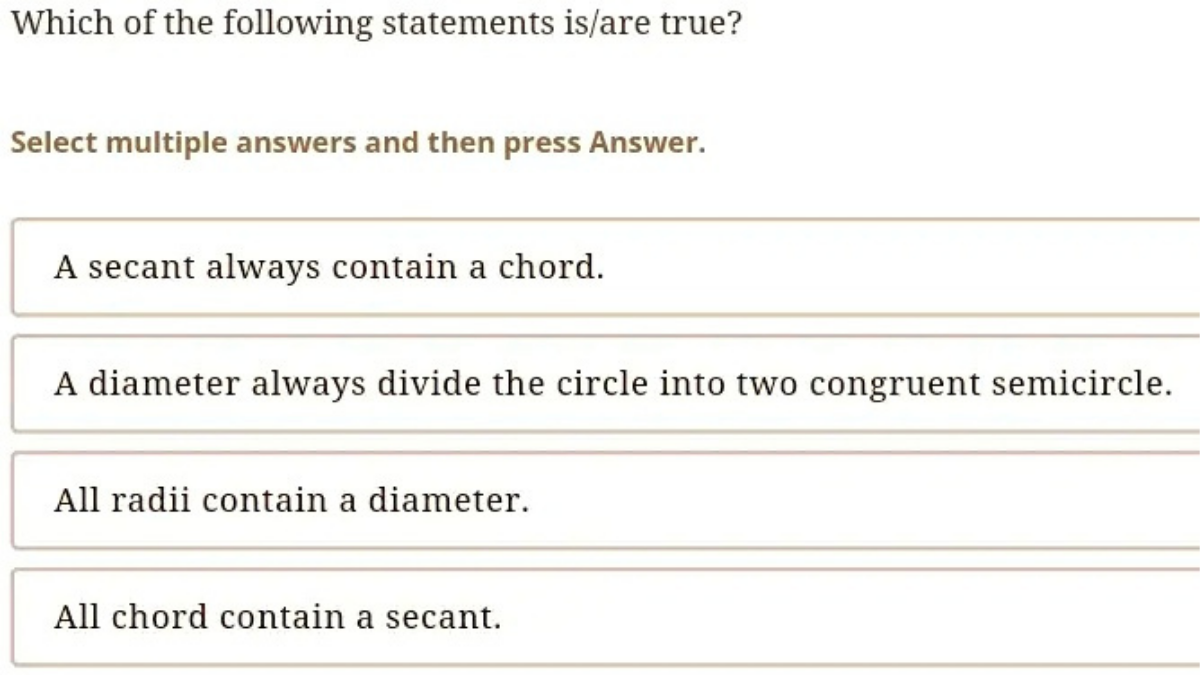
Which of the Following Statements Is True? Expert Guide
The question “which of the following statements is true?” appears simple on the surface, yet it represents one of the most powerful tools for evaluating knowledge, reasoning, and critical thinking. Whether you encounter it in exams, interviews, or real-world decision-making, your ability to answer it correctly depends on more than memorization—it requires clarity, logic, and analytical precision.
This comprehensive guide explores how to approach this question with confidence. From understanding its structure to applying proven strategies, you’ll gain the skills needed to consistently identify the correct answer when faced with which of the following statements is true?
Understanding the Meaning Behind the Question
At its core, which of the following statements is true? is designed to test your ability to distinguish fact from fiction within a given context. It requires evaluating multiple options and identifying the one that aligns with established knowledge or logical consistency.
This type of question often includes distractors—answers that seem plausible but contain subtle inaccuracies. Recognizing these traps is essential to selecting the correct statement with confidence.
Why This Question Appears So Frequently
The widespread use of which of the following statements is true? stems from its effectiveness in assessing comprehension. It doesn’t just test recall; it evaluates how well you understand relationships between concepts.
Educators and exam designers rely on this format because it reveals depth of knowledge. A correct answer indicates not only familiarity with the topic but also the ability to apply reasoning under pressure.
Common Contexts Where It Appears
You’ll frequently encounter which of the following statements is true? in standardized tests, academic exams, and professional certifications. It is particularly common in subjects like science, mathematics, and logic.
Beyond formal settings, this question also appears in everyday decision-making. Comparing options and identifying the most accurate statement is a skill used in business, research, and problem-solving.
The Psychology Behind Answer Choices
Answer choices in which of the following statements is true? questions are carefully constructed. Incorrect options often include partially correct information combined with subtle errors.
This design exploits cognitive biases, such as the tendency to choose familiar or intuitive answers. Being aware of this psychological aspect can help you approach the question more objectively.
Breaking Down the Structure of the Question
A typical which of the following statements is true? question consists of a prompt and several answer options. Each option must be evaluated independently before making a decision.
The key is to avoid comparing options too early. Instead, assess each statement on its own merits to determine whether it is fully accurate.
Step-by-Step Approach to Finding the Correct Answer
When facing which of the following statements is true?, begin by carefully reading the question. Misinterpreting the prompt can lead to incorrect conclusions.
Next, analyze each option methodically. Eliminate clearly false statements first, then focus on distinguishing between the remaining choices.
The Importance of Precision in Language
Precision is critical when answering which of the following statements is true?. Words like “always,” “never,” and “only” often signal statements that may be false.
Understanding nuanced language helps you identify subtle inaccuracies. Even a single incorrect detail can invalidate an entire statement.
Recognizing Absolute vs Conditional Statements
Absolute statements are often incorrect because they leave no room for exceptions. In contrast, conditional statements tend to be more accurate.
When evaluating which of the following statements is true?, pay close attention to qualifiers. They can significantly impact the validity of a statement.
Avoiding Common Traps and Misconceptions
One common mistake is choosing the answer that feels most familiar rather than the one that is objectively correct. Familiarity does not guarantee accuracy.
Another trap is overlooking small details. In which of the following statements is true?, even minor errors can make an option incorrect.
The Role of Critical Thinking
Critical thinking is essential for answering which of the following statements is true? effectively. It involves analyzing information, identifying patterns, and drawing logical conclusions.
Developing this skill improves your ability to evaluate statements quickly and accurately, even under time constraints.
Applying Logic and Reasoning
Logical reasoning helps you break down complex statements into simpler components. This makes it easier to identify inconsistencies or contradictions.
When approaching which of the following statements is true?, logic acts as a filter, eliminating options that do not align with established principles.
Using Elimination Strategies Effectively
Elimination is one of the most powerful techniques for answering which of the following statements is true?. By removing incorrect options, you increase your chances of selecting the correct one.
This approach is particularly useful when you are unsure. Narrowing down choices makes the decision-making process more manageable.
The Impact of Context on Correct Answers
Context plays a crucial role in determining which statement is true. A statement that is accurate in one scenario may be false in another.
Always consider the context provided in the question. This ensures that your answer aligns with the specific situation being described.
Real-World Applications of This Skill
The ability to answer which of the following statements is true? extends beyond exams. It is essential in evaluating information, making decisions, and solving problems.
In professional environments, this skill helps you assess data, identify accurate insights, and avoid costly mistakes.
Comparison Table: Correct vs Incorrect Statements
| Feature | True Statement | False Statement |
|---|---|---|
| Accuracy | Fully aligns with facts | Contains errors or inaccuracies |
| Language Precision | Clear and specific | Vague or misleading |
| Logical Consistency | Internally consistent | Contradictory or flawed |
| Use of Qualifiers | Balanced and realistic | Overly absolute |
| Context Alignment | Matches given scenario | Ignores context |
This table highlights the key differences you should look for when evaluating options in which of the following statements is true?
Common Mistakes to Avoid
Rushing through the question is a frequent mistake. Taking time to analyze each option improves accuracy.
Another error is second-guessing correct answers. Confidence, backed by reasoning, is crucial when selecting the true statement.
Time Management Strategies
Managing time effectively is important when dealing with multiple questions. Spending too long on one question can affect overall performance.
Practice helps improve speed and accuracy. Familiarity with which of the following statements is true? questions reduces hesitation.
Practice Techniques for Improvement
Regular practice is the best way to master this question type. Exposure to different scenarios enhances your analytical skills.
Reviewing incorrect answers is equally important. Understanding mistakes helps you avoid them in the future.
The Role of Experience and Knowledge
Experience plays a significant role in answering which of the following statements is true?. The more knowledge you have, the easier it becomes to identify correct statements.
However, knowledge alone is not enough. Combining it with reasoning ensures consistent success.
Building Confidence in Your Answers
Confidence comes from preparation and practice. Trusting your reasoning process is key to making accurate decisions.
Over time, answering which of the following statements is true? becomes more intuitive as your skills improve.
A Key Insight to Remember
“The difference between a correct answer and a convincing one is often just a single detail.”
This insight captures the essence of which of the following statements is true?, emphasizing the importance of careful evaluation.
Conclusion
Mastering which of the following statements is true? is not just about passing exams—it’s about developing a mindset rooted in logic, precision, and critical thinking. By understanding the structure of these questions and applying proven strategies, you can consistently identify the correct answers with confidence.
This skill has lasting value, extending into academic, professional, and everyday contexts. With practice and awareness, you can transform a seemingly simple question into a powerful tool for accurate decision-making.
FAQs
What does which of the following statements is true? mean?
It asks you to evaluate multiple options and select the one that is factually and logically correct based on the given context.
How do I answer which of the following statements is true? effectively?
To answer which of the following statements is true?, analyze each option carefully, eliminate incorrect ones, and focus on precise language and context.
Why is which of the following statements is true? difficult?
Which of the following statements is true? can be challenging because options often include subtle errors designed to test attention to detail.
What strategies help with which of the following statements is true?
Effective strategies include elimination, critical thinking, and careful reading to ensure accuracy when answering which of the following statements is true?
Can practice improve performance on which of the following statements is true?
Yes, consistent practice helps you recognize patterns and improves your ability to answer which of the following statements is true? accurately.